
Fashion Designer Wayne James Donates Hundreds of Historic Cuba Photos to Miami-Dade Public Library Archives
Fashion Designer Wayne James Donates Collection of Rare Historic Cuba Photos to Miami-Dade Public Library Archives

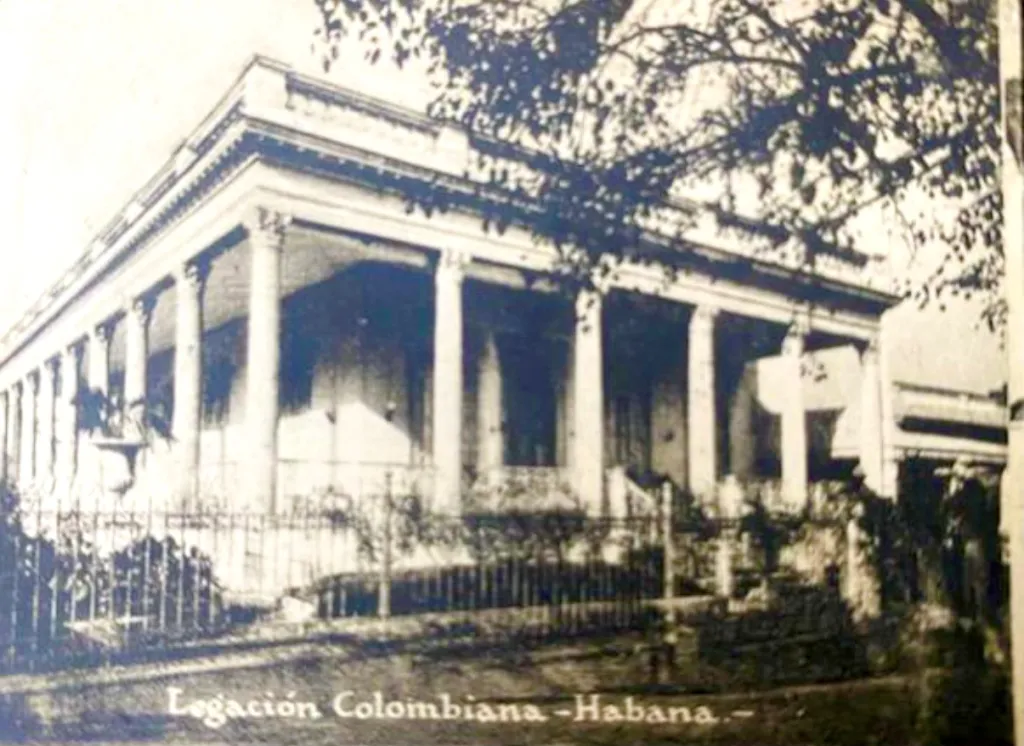
St. Croix-born Black fashion designer Wayne James has donated his collection of 1,670 century-old Cuba photographs to the Miami-Dade Public Library Archives. The captioned photographs, issued in April of 1925 by the then-Havana-based Henry Clay and Bock & Co., Ltd., cigar company, depict everything from Cuba’s grand public square and churches to picturesque plantations, public parks, and palatial mansions. All of the island-nation’s provinces are represented in the photographs, and the Archives has painstakingly scanned and digitized each image in high resolution. The general public can access the collection and its supporting literature via the library’s website. And the original photos, preserved as an album, has been deposited with the Archives for special-request access by the public. After discussions with various Florida-based institutions, including universities, museums, and Cuban organizations, James decided to gift the collection to the Miami-Dade Public Library after the institution assured him that it was ready, willing, and able to expeditiously avail the collection to the public. The specific language of the gift reads as follows: “A gift from St. Croix-born fashion designer Wayne James, president of http://www.waynejames.com , to the people of Cuba and of the world in recognition of the 100th anniversary of the 1925 issuance by Henry Clay and Bock & Co., Ltd., ‘Postales para el Album” series, as an expression of gratitude to the architectural heritage of the Caribbean by the Messer and James families of St. Croix, United States Virgin Islands.” The gift was officially executed on May 5, 2026, and the collection was made available to the public in early June.

Background:

In 1925, the Henry Clay and Bock & Co., Ltd., cigar company began issuing postcards depicting the grandeur of Cuba. The sequentially numbered cards (No. 1- No. 1,671) were individually enclosed—like baseball cards—in the company’s cigarette packages. Customers were encouraged to purchase a company-issued, hardbound photo album, its 115 pages providing sequentially numbered spaces and province headings (“Havana,” “Camaguey,” “Matanzas,” etc.) for the corresponding cards. The objective of the initiative was to market the cigarettes while encouraging customers to collect then safeguard the keepsake cards by gluing them into the album. Apparently, vey few collectors accomplished the arduous task of securing all 1,671 of the cards. (A 40-page informational/instructional booklet describing the socio-historical significance of the project and providing an itemized listing of each photo in the series was provided with the purchase of each album. The James collection booklet is believed to be the only copy to have survived the ravages of time.) And many of the individual cards have been lost to time.

The History of the Messer/James Collection:

In 1918, after having lived 10 years in the Dominican Republic, Alexander Messer, born on St. Croix, Danish West Indies, in 1888 to Christian Messer(1859-1927) and Andrina Prince Messer (1865-1941), emigrated to Cuba to work as a musician and sugarcane laborer, settling in Santiago de Cuba. Alexander was joined by his younger brother, Richard Messer, born in 1893, who settled in Camaguey.

Beginning in 1925, in order to share their adopted Cuban homeland with their parents and siblings, Alexander and Richard would occasionally enclose the Henry Clay and Bock & Co., Ltd., picture-cards in their letters. Alfonso Messer (1896-1973), younger brother to Alexander and Richard, would safeguard the photos at the family’s ancestral home in Frederiksted, St. Croix. And in 1973, upon the death of Alofonso, the nascent collection of approximately 100 picture-cards passed to the brothers’ great-nephew Wayne James, a boy of 11 years of age at the time of his acquisition of the photos.

Fascinated with Cuba because of his great-uncles’ emigration to the island and because of an early introduction to the history of the island and its 1959 revolution by his elementary school teacher Selwyn Checkley, young James precociously recognized the historical significance of the photos and preserved them, over the course of the following 50 years augmenting his family’s seminal collection via meticulous private collecting and shrewd bidding at international auction houses.
“The amassing of the collection was the result of the convergence of scholarship, serendipity, and a stubborn devotion to the cause,” James said. Today, Wayne James’ private archives boats four complete collections of the Henry Clay and Bock & Co., Ltd., images, James’ collection believed to be the world’s largest and most comprehensive. (It is unknown outside of Cuba whether the collection housed at the National Library of Cuba in Havana contains all 1,671 images. And the University of Miami’s Cuban Heritage Collection, the largest repository of Cuban archival material outside of Cuba, has fewer than 900 of the images.) James’ collection also includes one original copy of the 40-page information booklet issued with the photos in 1925. The booklet—in pristine condition—is believed to be the only extant copy. It provides invaluable details about the century-old photographic series and the institution that gave it rise.
The Sharing of the Legacy:
In October of 2009, while Senator of the United States Virgin Islands and visiting Cuba to attend the biennial conference of Caribbean architects, James donated a CD containing approximately 250 of the Henry Clay and Bock & Co., Ltd., images to the University of Havana library, which, at the time, had no archival knowledge of the series. And in 2021, inspired by his dear Cuban friend Luis C. Garcia-Menocal, great-grandson of Mario Garcia-Menocal, Cuba’s third present (1913-1921), James directed Going…Going…Gone: The Grandeur of Golden-Age Cuba, a 3-part, 6-hour docufilm executed in the emerging “quiltography” genre, approximately 450 of the Cuba photos serving as the visual foundation of the film. The critically acclaimed film premiered at the Musto Center in Union City, New Jersey, and was featured on the front page of Havana Times.

Preserving the Legacy:

Christopher Columbus encountered Cuba in 1492; and in 1521, Havana was established. Thus, the 1925 Henry Clay and Bock & Co., Ltd., Cuba photo series depicts a sweeping 400 years of the island’s grandeur. Today, much of the island-nation’s architectural heritage is in need of preservation. And, as such, the Henry Clay and Bock & Co., Ltd., collection of 1,671 images serves as the most comprehensive photographic record of pre-1950 Cuba.
“By giving the collection to the Miami-Dade Public Library, I have essentially given the collection to the people of Cuba and the world,” James said.
The St. Croix-based family lost contact with Alexander and Richard Messer after the 1959 Cuban Revolution, the last physical contact occurring when their niece Eileen Messer (1913-1996) visited Cuba in 1953.

“We in the family believe that Alexander and Richard Messer lived into the late 1960s or early 1970s; in-situ research will have to be conducted to uncover more details about their final years,” James said. “What is definitively known, however, is that the photographic legacy they established a century ago endures. And with this gift to the Miami-Dade Public Library, the people of Cuba and the world will forever know the beauty and grandeur of Cuba as it was in 1925,” James concluded.